


Why Your Equestrian Brand Gets Attention but Not Sales: 7 Gaps in Your Equestrian Marketing Strategy
Visibility is not the same as demand. Seven places where equestrian marketing loses the sale, and how to find them.
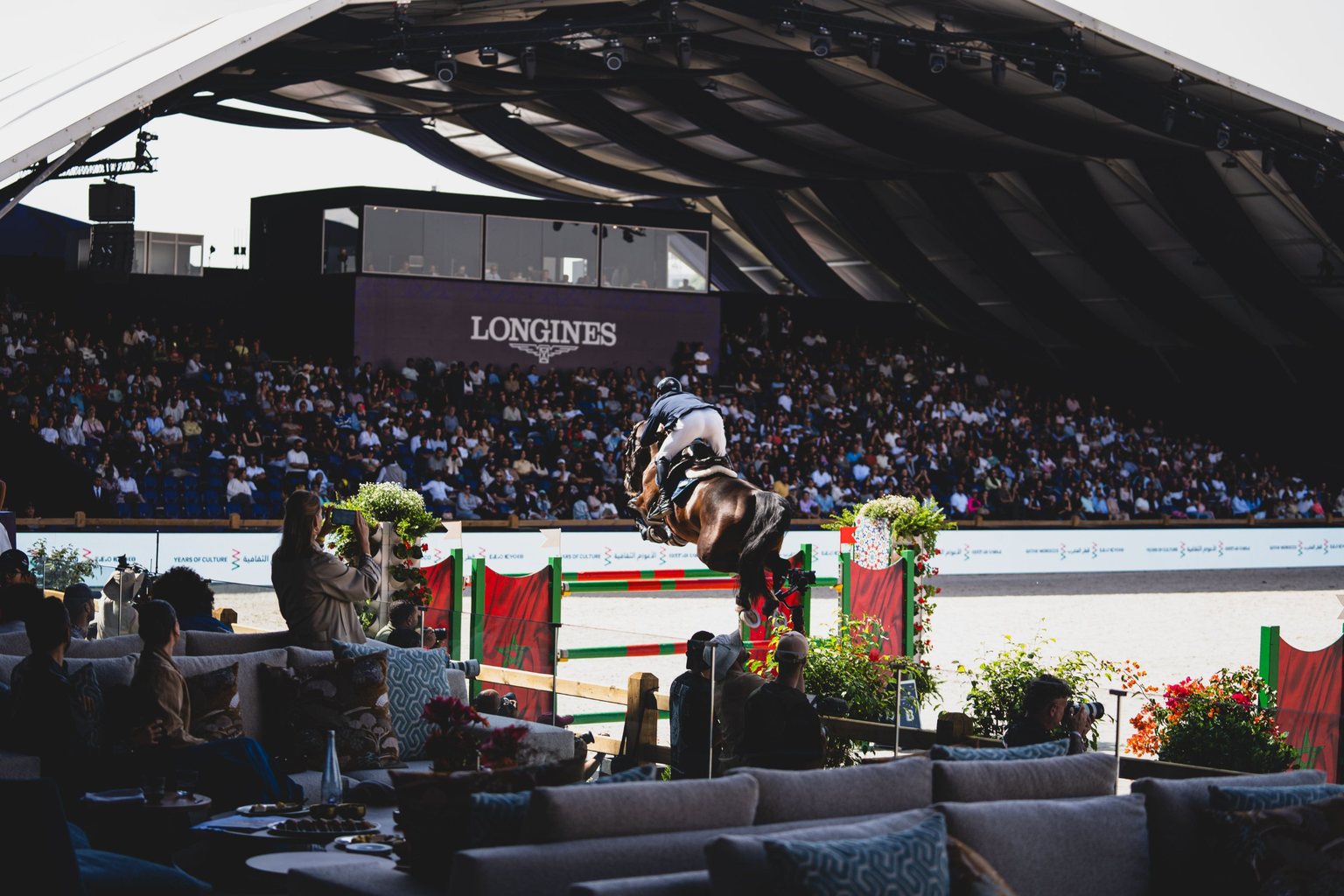
It usually happens in the weeks after a big show. The booth was busy from the first morning. The new collection photographed beautifully against the arena. Followers climbed, a well-known rider shared the reel, and the inbox filled with compliments. Then the circuit moved on, the season settled, and the sales report told a quieter story.
Most equestrian brands reach this moment. The marketing appears to be working: people see the brand, admire it and visit the website. Yet revenue does not follow at the rate the attention suggests. Customers cost more to acquire than they should. The advertising dashboard reports success that the bank account does not reflect.
It is tempting to answer with more: more posts, more advertising, a new platform, a bigger budget. In our experience, that is rarely where the answer lies. The opportunity almost always sits somewhere between the first impression and the final purchase, in the quiet mechanics of audience, positioning, website, measurement, content, search and planning. That space is where a sound equestrian marketing strategy does its most important work, and where most brands have never looked closely.
This industry makes the diagnosis harder than it is elsewhere. Equestrian purchases are shaped by specialized knowledge, by relationships, by trust built over seasons and by a community in which a trainer's opinion can outweigh any advertisement. A premium apparel label, a tack retailer, a supplement manufacturer and a training program each sell in different ways. They share one truth: visibility alone does not build a business.
What follows are the seven gaps we find most often when an equestrian brand is visible but not converting, written in enough depth to help you recognize which ones apply to yours.
01Reaching People, but Not the Right Customers
The first gap is the most common, and the most expensive: confusing the size of an audience with its quality.
A post can reach thousands of people who love the photography, the horses and the lifestyle, and still reach very few who will ever buy. An advertisement can produce inexpensive clicks from people with no intention of purchasing. A brand can build a following of genuine admirers who will never become customers. None of that is wasted, exactly, but awareness and buying intent are different things, and a marketing budget pays for both at the same price.
There is no single equestrian customer
The equestrian market is not one audience. It is dozens of smaller ones, each with its own motivations, price sensitivity and buying rhythm.
A hunter-jumper buying a show coat cares about cut, color conventions and how the coat reads to a judge. An eventer choosing cross-country protection is buying safety certification and fit under pressure. A dressage rider investing in a saddle pad may be thinking about shape, symmetry and how the pad frames the horse in the arena. A western performance rider is weighing a different set of traditions entirely.
Within each discipline the differences continue. The junior rider's parent is buying with a different budget and different worries than the amateur owner. The professional outfitting a barn of twenty horses is a wholesale relationship in all but name. The rider buying a first pair of technical breeches needs reassurance; the rider buying a fifth pair needs only to know the new color is in stock.
When advertising addresses all of them with one message to one broad "horse lover" audience, most of the budget is spent on people who were never going to buy.
The person who decides is not always the person who pays
There is one more figure in many equestrian purchases, and most marketing ignores them entirely: the trainer.
In much of this industry, a trainer's recommendation decides a purchase before the customer ever sees an advertisement. Riders ask their trainer which saddle, which bit, which supplement, which boots. Barns standardize on brands. A trainer who trusts a product can introduce it to an entire program; a trainer who distrusts it can quietly end its chances with a dozen clients.
The same pattern runs through farriers, veterinarians, saddle fitters and barn managers. Brands that understand who influences the sale, and not only who pays for it, reach the market far more efficiently. That can mean professional programs, trainer education, presence at the shows where professionals gather, and messaging that respects the expert in the room rather than talking around them.
Building a sharper audience strategy
Effective targeting begins with precise questions:
Discipline and level: Which riders is this product truly designed for, and at what stage of their riding life?
The problem being solved: Is the customer replacing something worn out, solving a fit problem, preparing for a specific competition or investing in an upgrade?
The influencers: Who shapes the decision? Trainer, parent, professional, peer?
The purchase type: Is this a routine replenishment, such as supplements, grooming products and fly spray, or a considered investment such as a saddle, a show coat or a trailer?
The answers should shape everything downstream: campaign objectives, targeting, creative, the search terms you bid on and the page a customer lands on. For organic marketing, they determine which questions your content answers and whose language it speaks.
The aim is not simply more reach. It is a higher proportion of the right people moving from discovering the brand to considering it, and from considering it to buying.
02No Clear Reason to Buy
A customer can recognize a brand, admire it and still have no reason to choose it. That is a positioning problem, and it is far more common than most brands realize.
The equestrian market includes heritage houses, specialist manufacturers, independent retailers, direct-to-consumer labels and international companies, often competing for the same rider. Much of it makes the same promises: quality, comfort, performance, style. Those qualities matter. But because everyone claims them, claiming them does not set a brand apart.
Where real differentiation comes from
Meaningful differentiation is always specific. It may come from:
Construction and materials: a technical fabric, a tree design, a leather sourced from a particular tannery.
Fit: a pattern developed for a discipline, a body type or a horse's conformation.
Craft and heritage: the hands that make the product, the generations behind the workshop.
Expertise: a founder who competes, a design team that rides, a service that understands the sport.
Service: fitting advice, exchanges that respect how riders actually size, or support after the sale.
Point of view: a clear belief about the sport, the horse or the rider that customers recognize as their own.
The work is to identify which of these differences matter to your customer, then say them plainly and consistently. A technical apparel brand should explain more than how its collection looks: how the fabric moves, how it handles heat, how it holds up through a season of laundering and what the show rules require. A tack maker should explain the design decisions behind its products. A multi-brand retailer should explain its point of view: why these products, together, for this rider.
What happens without it
When positioning is unclear, advertising has little to work with beyond price, promotion and attractive imagery. That is how brands drift into constant discounting. Each sale trains customers to wait for the next one, margins narrow and the brand becomes harder to value at full price.
A well-defined position does the opposite. It gives every channel the same story to tell: the search result, the Instagram advertisement, the product page, the booth at the show and the email that follows all reinforce one idea of who the brand is and who it serves. That consistency does not require every message to look identical. It requires every message to point in the same direction.
A simple test
Before increasing marketing spend, ask whether a new visitor could explain, within a few seconds of arriving, what makes your brand different, who it is designed for and why it deserves consideration. If the answer is unclear, more exposure will simply put the problem in front of more people.
03A Website That Attracts Visitors but Does Not Convert Them
A website is often treated as the place a campaign ends. In reality it is the most important part of the sale.
Anyone who clicks an advertisement or arrives from a search has already shown interest. What happens in the next minute decides whether that interest becomes a purchase, an inquiry or an exit, and whether the money spent to bring them there was an investment or a loss.
Where beautiful websites lose sales
Elegant websites lose sales in small, ordinary ways:
Sizing that is hard to find or hard to trust. Equestrian apparel and equipment are sized inconsistently across brands and countries. A rider who cannot tell whether a 28 regular in your breeches matches a 28 regular elsewhere will hesitate, or buy two sizes and return one.
Costs that appear late. Shipping, duties and handling revealed only at checkout are one of the most reliable ways to lose a sale at the last moment.
Policies that are buried. Returns and exchanges matter more in this category than most, because fit is so personal.
Photography that flatters but does not inform. Lifestyle imagery sells the feeling; detail imagery sells the decision. Riders want to see the stitching, the lining, the grip panel, the buckle, and how a garment looks on a rider in motion rather than on a hanger.
Mobile pages that load slowly or display awkwardly, often on a phone at the barn or the show grounds, on an unreliable connection.
Navigation organized the way the business thinks rather than the way riders shop. Riders shop by discipline, by horse, by size and by need, not by internal product codes or seasonal collection names.
Equestrian purchases require confidence
Most equestrian products ask more of the buyer than an everyday purchase. A rider may need to compare fit, materials and technical specifications, check suitability for a discipline or competition rules, or confirm that equipment will suit a particular horse. A good product page answers those questions before they are asked: clear descriptions, useful detail photography, accurate specifications, honest sizing guidance, transparent shipping and return terms, and evidence from other riders where it exists.
The checkout deserves the same attention
According to Baymard Institute's ongoing research, roughly 70 percent of online shopping carts are abandoned. That is a broad benchmark rather than a forecast for any single store, but it is a reminder of how often the path from interest to purchase breaks, and how much opportunity sits in the purchasing experience rather than in buying more traffic.
Reading where customers leave
Where customers leave the journey tells you where to look:
Many product views, few added to cart: usually product presentation, pricing, positioning or the relevance of the traffic.
Many carts, few orders: usually checkout friction, shipping costs, payment options, discount codes that fail or technical errors.
Strong desktop conversion, weak mobile conversion: usually page speed, layout or a checkout that is difficult on a small screen.
In each case, increasing the advertising budget is rarely the right first response. A conversion-focused website is not necessarily the most elaborate one. It is the one that helps the right customer understand the product, believe in its value and complete the purchase with confidence.
04Advertising That Looks Busy but Has Not Proven Profitable
Paid advertising can be one of the most effective growth channels in the equestrian industry, but only when campaigns are built around real business objectives and judged on reliable data.
The most common mistake is judging performance by visible activity: impressions, clicks, engagement, reach and even the number of conversions an advertising platform reports. Each of those numbers is useful. None of them, on its own, proves that advertising is making money.
What ROAS does and does not tell you
Return on ad spend, or ROAS, compares the revenue attributed to advertising with what the advertising cost. It does not measure profit.
Consider a retailer that earns $10,000 in attributed revenue from $2,000 in spend: a 5:1 ROAS, which sounds healthy. Whether it is healthy depends entirely on what it costs to deliver those sales.
Suppose the products carry a 40 percent gross margin. That $10,000 in revenue leaves $4,000 after the cost of goods. Subtract $2,000 in advertising and the brand keeps $2,000 before shipping, payment fees, returns and overhead. Now suppose the same campaign sold mostly discounted items at a 25 percent margin. The same 5:1 ROAS leaves $2,500 after cost of goods, and just $500 after the advertising, before any other cost.
Same ROAS. Very different business.
Know your break-even point
Every brand should know the return at which its advertising begins to pay for itself. A simple starting point is to divide one by your gross margin. At a 50 percent margin, break-even ROAS is 2:1. At a 40 percent margin it is 2.5:1. At 25 percent it is 4:1. Shipping subsidies, discounts and returns push the number higher.
That figure, alongside your average order value, the cost to acquire a customer and how often customers return, defines what you can afford to spend to win a new customer. A supplement brand whose customers reorder every month can afford to pay far more for a first purchase than a brand selling a saddle a rider may buy once in a decade, because the value of that customer unfolds over years.
Measurement has to be right first
None of this can be trusted if the measurement is wrong, and measurement errors are among the most common and costly issues we find.
Conversions that fire on the wrong event. A conversion tag placed so that it fires when a page loads, rather than when a purchase or booking is completed, can report hundreds of conversions that never happened.
Duplicated purchases. A sale recorded twice, by both a browser pixel and a server connection without proper deduplication, or by a thank-you page that fires on every reload, inflates results.
Incorrect values. Order values that include tax and shipping, or ignore discounts, distort ROAS.
Missing events. If purchases made after a phone call, at a show or through a dealer never reach the platforms, advertising may be undervalued.
Attribution differences. Meta, Google and Google Analytics each credit sales differently. Meta's default view, for example, credits purchases within seven days of a click and one day of a view, so the platforms will rarely agree, and the sum of what each claims is often more than the business actually sold.
The danger goes beyond inaccurate reporting. Advertising platforms learn from the conversions you send them. When those signals are wrong, the platforms optimize toward the wrong people, and the campaign drifts further from real customers every week. A proper review compares what the platforms report with the orders, revenue and customers the business actually recorded.
Each channel has a different job
Search advertising captures people already looking for a product. Social advertising introduces the brand to people who have not started looking. Retargeting reconnects with visitors who need more time, which in a considered purchase may be weeks. Judging all three by the same yardstick, usually last-click ROAS, leads to poor decisions: the channel that creates demand looks weak, and the channel that harvests it takes the credit.
The objective is not the most impressive dashboard. It is a clear understanding of how marketing contributes to revenue, what that revenue costs to acquire and whether the result supports the growth the business is working toward.
05Content That Builds Admiration but Not Decisions
Few industries offer richer material for storytelling than ours. The horses, the craftsmanship, the competition, the early mornings and the quiet hours in the barn make for extraordinary imagery, and equestrian brands are often very good at it.
Imagery alone, however, is not a strategy. A brand can keep a beautiful feed and still leave customers without what they need to buy: how the product is made, how it fits, how it compares, how to care for it and why it is worth the price.
This usually happens when content is planned around a posting schedule rather than around the customer's decision. The calendar fills, the grid looks consistent and nothing in particular moves anyone closer to a purchase.
Content for each stage of the decision
An effective content strategy serves the customer through each stage:
Discovery. Content that introduces the brand and helps the right rider recognize it is for them: editorial photography, the product in real use, rider partnerships, the story behind the brand and the people who make it.
Consideration. Content that answers deeper questions: construction details, fit guidance, comparisons with alternatives, how a product performs over a season, short videos that show what photographs cannot.
Decision. Content that removes doubt: clear specifications, reviews and rider feedback, transparent policies, sizing help and an easy path to purchase.
After the purchase. Content that builds loyalty and the next order: care instructions, fitting advice, styling for the show ring, replenishment reminders and recognition of the customer's own achievements.
Most equestrian brands invest heavily in discovery and very little in the stages that follow, which is precisely where sales are won or lost.
Partnerships with substance
Rider and ambassador partnerships are central to equestrian marketing, and they can be powerful. They work best when the partnership carries real information as well as visibility: why a professional chose the product, how it performs in their program and what they would tell a rider considering it. A respected rider explaining a decision is worth far more than the same rider simply wearing the logo.
Service businesses need content too
The same principles apply to businesses selling expertise rather than products. A trainer, a breeding program, an equine practice or a show needs content that demonstrates knowledge, explains how the service works, makes clear who it is for and earns trust before anyone makes an inquiry.
Not every piece of content has to sell. Some builds awareness, some builds trust and some answers the question that would otherwise stop a purchase. Taken together, though, a brand's content should leave a customer understanding it, believing in its value and ready to act.
06Search Traffic From the Wrong Searches
Search engine optimization remains one of the most valuable channels for equestrian businesses, because it reaches people at the moment they are actively looking. But ranking for a term is not the same as ranking for the right one.
Search intent, by discipline and by stage
Searches carry intent, and that intent can be read:
Research searches signal someone still learning, such as "half chaps vs tall boots" or "how should a dressage saddle pad fit."
Comparison searches signal someone narrowing a choice, such as "best breeches for hunter jumpers" or "best fly sheet for sensitive horses."
Purchase searches signal someone ready to buy, such as a specific product name, a brand and model, or "white dressage saddle pad full size."
A retailer of premium show jumping equipment gains far more from searches for specific products, brands and technical requirements than from broad traffic about horses. Broad traffic can still build awareness, but it should not be mistaken for demand.
The strongest search strategies begin with the customer's own language. What do riders actually type when comparing products? Which terms reveal a discipline, a problem or a level of expertise? Which signal research, and which signal readiness? The answers should shape the structure of the site.
Structure is strategy
Category pages should be organized the way riders shop, by discipline, horse, product type and need, and written to earn visibility for broader product searches.
Product pages need accurate, specific information that helps both riders and search engines understand exactly what is offered: materials, sizing, discipline suitability and care.
Articles that answer substantive questions attract the right visitors, demonstrate expertise and introduce readers to the products or services they discuss. Their value multiplies when they are connected through thoughtful internal links rather than published as isolated pieces.
For ecommerce brands running Google Shopping, the product feed is part of search strategy too. Titles and attributes that include discipline, size, color and material help the right products appear for the right searches.
Search is changing
More riders now ask ChatGPT, Gemini and Google's AI results for recommendations: which brand of breeches holds up best, which supplement suits an older horse, which agency understands equestrian marketing. Those tools draw on the same qualities traditional search rewards: clear, specific, well-organized information from sources that demonstrate real expertise. Structured product data, thorough answers to common questions and consistent information across the web make a brand easier to find and easier to recommend.
Technical health still matters
Indexing problems, duplicate pages, broken links, incorrect canonical tags, slow mobile pages and inconsistent product information can undermine otherwise sound work. Large catalogs need particular care: how products are categorized, how variants are handled and what happens to the search value of discontinued items.
Rankings and traffic are useful indicators. The real measure is whether search brings in the right visitors, and whether the site helps them take the next step.
07Channels Working Alone Instead of as One Equestrian Marketing Strategy
The most overlooked gap is the absence of a connected plan.
Many businesses invest in social media, advertising, search, email, public relations, shows and a website, yet plan and measure each separately, often with different people or agencies responsible for each. The result is a collection of activities without a clear relationship to the customer's journey or to the goals of the business.
One customer, many moments
Consider a rider who discovers a brand through an Instagram advertisement in February, during the winter circuit. She visits the website, looks at two products and leaves. In March she sees the brand on a rider she admires at the in-gate. In April she searches for the product she liked and finds a competitor with a better product page and a clearer size guide. She buys from the competitor.
The first brand created the interest, paid for it and lost the sale, not through one failure but because nothing connected the moments.
A connected strategy treats those moments as one journey. Social advertising introduces the brand. The website gives her what she needs to decide. Search keeps the brand present when she returns to research. Email, once she has subscribed, gives her reasons to come back: a size guide, a care note, an invitation to see the collection at the next show. Remarketing, within privacy rules and platform policies, reconnects with visitors who came close.
Email and retention are often the missing piece
For many equestrian brands, the most underused channel is the customer list they already have. A welcome sequence for new subscribers, a reminder for browsers who did not buy, a thoughtful follow-up after a purchase and timely replenishment notes for consumable products can contribute a significant share of revenue at very little cost. Customers who have already bought from a brand are usually the most likely to buy again.
Plan around the riders' year
The equestrian year has a rhythm, and marketing should follow it. Demand gathers around the winter circuits, the spring events, the major summer shows and the indoor finals in the fall, alongside product launches, the holidays and the weather that dictates when riders buy blankets, fly gear and footwear. A brand that plans its creative, advertising and inventory around its customers' calendar will almost always outperform one that spreads effort evenly across twelve months.
Connected decisions
A connected view also improves decisions. If advertising attracts qualified visitors but the website does not convert them, the priority is the website, not more media. If first purchases are strong but customers rarely return, retention deserves attention before acquisition. If search produces valuable customers while paid social struggles to reach an acceptable acquisition cost, investment may need to shift.
None of this requires being everywhere. A business with limited resources is usually better served by three channels executed well and working together than by a dozen managed loosely.
Finding Where Your Marketing Is Losing Sales
Knowing the seven gaps is a starting point. The next step is finding out which of them apply to your business, and that should begin with evidence rather than assumptions.
Traffic rising, sales flat: compare conversion rates by channel, device, landing page, product category and new versus returning customers.
Carts filling, orders not: look closely at checkout, shipping costs, payment options, discount codes and technical errors.
Sales arriving, profit not: compare the cost to acquire a customer with real margins, and confirm that tracking is accurate before moving budget.
Strong engagement, weak sales: check whether the audience matches your customer and whether the path from social to purchase is clear.
Search traffic without inquiries: review which searches bring visitors and whether the pages they land on serve what they were looking for.
Platform results that do not match the bank account: reconcile what Meta and Google report with the orders and revenue the business actually recorded.
These issues often overlap. A low conversion rate can reflect the wrong audience, unclear positioning and a difficult checkout at once. Changing one element without understanding the whole may produce little improvement, or make the true cause harder to see.
A sound review looks at the system as a whole, uses a long enough period to account for the show season, separates new customers from returning ones and ends in a short list of priorities ranked by likely impact and effort. More often than not, correcting tracking, product presentation or checkout does more for growth than a larger budget.
More Effective, Not More
Growth does not require a brand to spend more, post more or appear everywhere. It requires knowing what the business is trying to achieve, finding what stands between today's results and that goal, and putting resources where they will make the greatest difference.
In the equestrian industry, that takes two kinds of fluency at once. The first is the commercial discipline of modern marketing: positioning, measurement, media, search and the economics of acquiring a customer. The second is a real understanding of riders, trainers, disciplines and the rhythm of the show year. Either one alone falls short. A brilliant media buyer who does not understand why a dressage rider and a hunter rider see the same product differently will waste money. A lifelong horseman without command of the data will never know which half of the budget is working.
A premium product needs a different message from an everyday essential. A heritage manufacturer needs a different path from a new direct-to-consumer label. A service business depends on trust and qualified inquiries rather than a checkout. The right approach begins with those distinctions, never with a formula.
For brands already investing in marketing, the most valuable next step is often not another campaign. It is a careful look at the system already in place.
Frequently Asked Questions
What is a good ROAS for an equestrian brand?
It depends on margins. A useful starting point is one divided by your gross margin: at a 50 percent margin, advertising breaks even at a 2:1 ROAS; at 25 percent, it needs 4:1. Shipping, discounts and returns raise that figure. Brands whose customers reorder, such as supplement and care brands, can afford a lower first-purchase ROAS because each customer is worth more over time.
Why does Meta report more sales than my store recorded?
Platforms credit sales differently. Meta counts purchases within its attribution window, by default seven days after a click or one day after a view, and Google applies its own rules, so the same sale can be claimed by more than one platform. Duplicated or misconfigured tracking can inflate numbers further. Reconciling platform reports with actual orders is the only reliable way to know what advertising is producing.
Why is my equestrian brand's social media popular but not selling?
Usually because the audience enjoys the content but does not match the buyer, the content does not explain why the product is worth buying, or the path from a post to a purchase is unclear. Engagement signals interest, not intent.
Should an equestrian business advertise on Meta or Google first?
Google search captures people already looking for what you sell, which often makes it the more efficient starting point for a specific product or service. Meta is stronger for introducing a brand to riders who are not yet searching, and for visual products. The right choice depends on what you sell, your margins and how established the brand is.
How long does equestrian SEO take to show results?
Most businesses see early movement within three to six months, with stronger results building over a year or more. Timing depends on the site's technical health, the competition for its search terms and how consistently useful content is published.
How do trainers influence equestrian purchasing?
Significantly. For saddles, bits, boots, supplements and many other products, riders often follow their trainer's recommendation, and barns frequently standardize on brands. Professional programs, trainer education and presence where professionals gather can reach a whole program of riders through one trusted voice.
Complimentary Marketing Performance Audit
Your Marketing Deserves a Thoughtful Second Look
If your brand is earning attention but not the sales, inquiries or growth you expected, the first step is understanding why.
Our complimentary Marketing Performance Audit is designed for equestrian brands already investing in marketing. Our team reviews your website, advertising, tracking, search visibility and social presence before we speak, then walks you through what is working, what may be holding you back and where to begin. You receive a written summary to keep, whether you work with Kodiak or with your own team.
Just getting started, or not yet advertising? Our Introduction Call is a simple conversation about your goals and the right place to begin. Book an Introduction Call
About Kodiak Collective EQ
Kodiak Collective EQ is an equestrian marketing agency bringing more than thirty years of advertising experience, rooted in the New York agency world, and more than twenty years inside the equestrian industry to brand strategy, paid advertising, search, website development, social media and creative for equestrian brands.